
Grey vs Green
Choice or compromise?

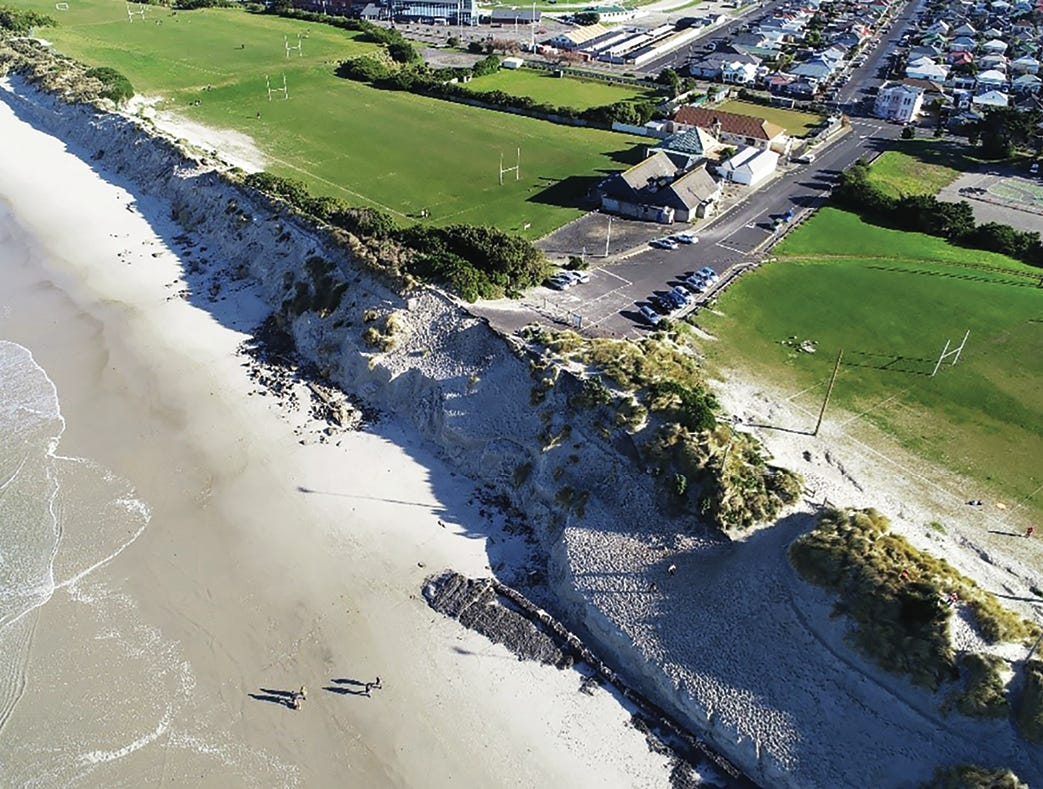
As the climate changes, it creates uncertainty between society and how we interact with the natural world. This is particularly pronounced for coastal communities, which face unique challenges from rising sea levels, worsening storm surge, coastal erosion, and saltwater intrusion. To name a few. Traditionally, grey infrastructure such as seawalls, levees, dikes, flood barriers, and floodgates have been used to protect these communities from the immediate impacts of coastal hazards. However, as climate change intensifies, these methods of defense, referred to as grey infrastructure, are becoming less and less reliable. Considering that reliability is meant to be one of the strengths of grey infrastructure, as we’ll discuss below, this increasing lack of confidence has required us to think of new approaches. And as is often the case in the climate adaptation space, nature-based solutions (NbS) are coming to the fore-front as an effective adaptation measure to a climate system that is becoming inherently more erratic.
Why grey infrastructure?
When it comes to addressing the hazards inherent to any coastal settlement, grey infrastructure has been the de facto choice for urban planners for decades (or even centuries). This is because these solutions can be engineered with precise specifications and provide predictable (and modelable) protection against storm surge and flooding. For example, a well-designed seawall can deflect waves and protect urban assets from direct impact. Additionally, grey structures can be rapidly deployed, delivering near-immediate relief for critical segments of densely populated coastal zones. Finally, these solutions are very well established, engineers know how to scale them to withstand a given level of expected impact, and costing can be carried out without too many undue surprises.
All of that being said, these solutions are not without their drawbacks. For starters, while the development of grey infrastructure may indeed benefit its section of the coastline, the construction of massive concrete barriers can alter natural coastal dynamics. A phenomenon referred to as ‘coastal hardening’. They often disrupt sediment transport, which can have various harmful impacts on local marine ecosystems, and lead to increased erosion in adjacent areas. At best these issues will remain localised, at worst this can create a cascading domino effect in which one coastal barrier causes enough issues that a neighbouring section of coastline will require intervention. Once built, grey infrastructure also tends to be difficult to modify. While this is certainly the purpose of this approach, to create something static, inflexible, rigid; as sea levels continue to rise and storm patterns change, these static defenses are becoming less effective or require costly retrofits. A final consideration, and one that was only of tertiary interest until recently, is the negative climate impact of grey infrastructure. In addition to the list of negative impacts on local biodiversity that can be caused by artificially manipulating a stretch of coastline, the construction process (generally very heavily relying on concrete) can create much higher CO2 emissions than one would normally expect for a construction project.
One then starts to see the negative feedback loop of using grey infrastructure to address the hazards that are magnified by the changing climate. With accelerating climate changes, the more we need to retrofit or re-install coastal grey infrastructure. However, the more emissions we create, the more rapidly the climate will change, and the more we will need to be retrofitting the previous projects to keep pace. Of course there are many for- and non-profit organisations developing lower emission construction methods, as well as grey infrastructure that can be more nature positive. For example, seawalls that provide similar structure to mangrove roots. So if grey infrastructure is becoming increasingly unable to cope with the pace and scale of natural hazards, and at best can only mimic natural solutions, why not just bring nature directly back into the solution space?
Is Green the new Grey?
When one uses the term green infrastructure, it’s important to establish that this doesn’t mean one will simply plant some trees and be done with it. While green infrastructure is at its core an NbS, it is strategically designed to meet a real infrastructure need. There are also hybrid green-grey approaches, which we’ll cover below. Purely green infrastructure for coastal resilience leverages natural processes to mitigate flooding, stabilize shorelines, and protect coastal communities. Techniques include restoring salt marshes and mangroves, constructing living shorelines, and creating urban wetlands. These solutions not only manage risk from natural hazards, but also enhance biodiversity, improve water quality, and sequester carbon.
Perhaps most appealing, depending on one’s point of view, is that green infrastructure works in harmony with natural coastal processes. For example, restored mangrove forests can absorb wave energy, reduce erosion, and provide critical habitats for marine species. Contrary to their concrete counterparts, NbS are also inherently adaptable. As sea levels rise or storm intensity increases, healthy wetlands or dunes can migrate and evolve, offering a dynamic form of protection that grey infrastructure cannot match without direct human intervention (i.e. costly retrofitting). Beyond flood control and water quality improvement, green infrastructure offers recreational spaces, and boosts local economies through enhanced tourism and fisheries. Adding to the overall well-being of the local coastal communities at no expense to neighbouring coastal regions (as is often the case for coastal grey infrastructure).
So if green infrastructure is so fantastic, why haven’t we torn out all of the concrete along the global coastline and restored local ecosystems instead? Well, for starters, there is the issue of scale. While seawalls may cause coastal hardening, they can be tailored to fit the requirements of a very specific build. NbS on the other hand requires ample space to function effectively, which can be a challenge in densely built coastal areas. Implementing a large urban wetland or extensive dune restoration may not be feasible in all settings, nor can mangroves or salt marshes be introduced wherever a coastal manager may desire. Where and to what extent certain NbS can be implemented relies, unironically, on nature itself. Assuming that an NbS is viable for a certain location, another immediate stumbling block is that while green solutions often yield significant long-term cost-benefit ratios (CBR; i.e. 20+ year horizons), the upfront costs and time needed for restoration can be prohibitively high, and the return on investment (ROI) may not be immediately apparent. Exacerbating this point is that green infrastructure often requires ongoing management to remain effective. Changes in plant health or invasive species, both issues exacerbated by the changing climate, can undermine performance and require costly and/or lengthy intervention. Lastly, and the most often cited issue, is that the benefits of green infrastructure can be more difficult to quantify compared to engineered structures. Meaning, even though one could model the complex effects of an NbS, we will never be as sure of the outcome as we can be from simply pouring a concrete wall.
Why not both?
If it is so well known that both approaches have their pros and cons, why not combine them to get the best of both worlds? These hybrid or ‘green-grey’ infrastructure techniques have been gaining much more attention in recent years, and there are many organisations actively researching new techniques, as well as how to better implement those that have already been established. EcoShape being a particularly good example. Other developments that have begun to create a possible future for hybrid solutions include the voluntary carbon market (VCM), and numerous nature positive international treaties, such as the Kunming-Montreal Global Biodiversity Framework. The VCM provides a new market in which the CO2 sequestered within an NbS may be traded like a commodity, which creates a sorely needed additional revenue stream to help finance the high price tag of NbS (compared to a similar grey solution). The international treaties, and by extension, society at large, provides the social license necessary to change tactics from grey to green. For example, while one can show the high CBR of NbS (indeed, the Nature Conservancy is constantly doing so), one doesn’t need to search far to find examples of an NbS getting torpedoed because, ‘the trees would ruin my view of the ocean’. However slowly cultural norms may change, they do eventually. And few people would argue that we are not in the middle of a sea change away from a preference for purely grey solutions.
Coastal cities, and the people who live in them, are at the frontline of climate change. Areas like Florida in the USA, and the Sundarbans in Bangladesh, are facing daily flooding risks from rising sea levels and increasingly severe storm events. Current grey infrastructure is already not flexible enough to respond to these rapid changes, whereas green infrastructure's adaptability can provide a more resilient long-term solution. Considering how congested many coastal areas are, or are becoming, the space required for large-scale purely green solutions may not be available. Hence the appeal of green-grey infrastructure that not only protects against flooding but also enhances community livability, as shown in these charming diagrams from Conservation International. Lastly, one mustn’t forget that access to well-designed green spaces can help bridge social inequalities, offering benefits that extend beyond physical risk protection to include improved mental and physical health for coastal residents.
Therefore, for many coastal cities the ideal approach lies in some combination of grey and green solutions. Consider storm surge management: a hybrid system might employ a robust grey barrier such as a sea wall, while integrating living shorelines or restored wetlands immediately behind it. This not only provides a hard defense against immediate storm impacts but also leverages natural processes to reduce wave energy, filter pollutants, and restore natural sediment flows. These hybrid solutions address multiple needs simultaneously, offering safety, environmental restoration, and community enhancement. For instance, urban waterfronts can be reimagined as multifunctional spaces that include engineered flood protection systems alongside public parks, green promenades, and wildlife corridors. Such integrated designs would ensure that coastal cities remain resilient, adaptable, and vibrant in the face of the changing climate.
To green, or not to green?
Grey infrastructure is an effective solution to offer rapid, robust, and targeted defense for high value assets against coastal hazards in the present. This had been enough of a winning combination for coastal planners that, until the last decade or so, there was not much broad interest in pursuing other options. Had the increasing intensity of natural disasters, amplified by the changing climate, remained within the envisioned scope of much of the current coastal infrastructure, the main-stream push towards green solutions may never have begun. The trade-offs between grey and green infrastructure are particularly pronounced in coastal cities, where the stakes are high, the property values exorbitant, and the challenges multifaceted. The immediate and reliable protection offered by grey infrastructure is becoming increasingly less appealing to society in the face of its negative impacts on environmental health and diminishing returns on its long-term adaptability. All the while the research into green and hybrid infrastructure is developing more sustainable, multi-functional approaches that work with nature. By thoughtfully integrating the strengths of both approaches, coastal planners can create robust, adaptive systems that protect urban populations while enhancing the natural environment. As coastal cities continue to grapple with the impacts of climate change, a balanced, hybrid strategy will be essential for safeguarding lives, livelihoods, and the rich biodiversity of our shores. What is needed now is the development of advanced modelling capabilities to better understand not just the interactions between the physics of natural hazards and the biological response of NbS to them, but how all of these factors will impact the socio-economic structure of coastal communities.